
There was a time, not so long ago, when serious luxury shopping in America meant exactly one place: Madison Avenue between 57th and 72nd Streets. Maybe you could make a case for Rodeo Drive if you were feeling generous toward Los Angeles. But the conversation about where the world's greatest fashion houses invested their most ambitious retail concepts always started and ended in Manhattan.
That conversation has changed. And the place that changed it is a 18-block neighborhood in Miami that, two decades ago, was best known for furniture showrooms and artist studios. The Miami Design District in 2026 isn't just competing with New York's luxury corridor. By several meaningful measures, it has surpassed it.
Manolo Blahnik Arrives: A Signal, Not a Footnote
When Manolo Blahnik opened its third U.S. boutique in the Design District, becoming the first Florida location for the storied footwear house, the announcement generated predictable headlines about celebrity shoe culture and Sex and the City nostalgia. But the real story was in the site selection.
Manolo Blahnik's retail footprint in the United States has been deliberately minimal: one boutique in New York, one in Beverly Hills. The brand does not franchise. It does not do pop-ups. Every location is a direct statement about where the brand sees its future clientele living, shopping, and spending. Choosing Miami over every other American city speaks volumes about the Design District's position in the global luxury hierarchy.

The boutique itself occupies a ground-floor space on NE 39th Street, designed to reflect the brand's signature aesthetic: refined without being austere, colorful without being garish. The Miami location carries the full women's and men's collections, along with exclusive colorways and materials available only in-store. For the kind of client who flies to Milan for fittings, having Manolo Blahnik within driving distance of Star Island is not a convenience. It is a validation of where they have chosen to live.
The Luxury Roster: Depth That Defies Geography
Manolo Blahnik's arrival is notable, but it joins a concentration of luxury retail that is, by any honest assessment, extraordinary for a neighborhood this size. The Design District's current tenant roster reads like the index of a fashion encyclopedia.
Hermès operates one of its most architecturally significant U.S. stores here, a two-story space that showcases the full universe of the maison, from ready-to-wear to home furnishings, equestrian goods, and, of course, the leather goods that generate the waitlists. Chanel occupies a corner location that has become one of the brand's highest-performing U.S. stores by revenue per square foot. Dior runs a multi-level boutique with a dedicated fine jewelry salon. Louis Vuitton recently completed a renovation that doubled its footprint, adding a VIP suite and private shopping rooms designed for clients who prefer to browse without an audience.
Goyard, the Parisian trunk maker that famously does not advertise and has no e-commerce presence, chose the Design District for one of its rare American outposts. For a brand that has operated on the Rue Saint-Honoré since 1853, the decision to open in Miami rather than, say, Chicago or Washington, D.C., tells you everything about where Goyard's clientele has migrated.
The list continues: Prada, Gucci, Fendi, Balenciaga, Loewe, Celine, Bottega Veneta, Tom Ford, Valentino, Givenchy. But the Design District's luxury proposition extends well beyond fashion.
Beyond Fashion: The Watchmakers, Jewelers, and Automakers
The most striking evolution of the Design District in recent years has been its expansion into categories that traditionally anchored themselves on Fifth Avenue or Place Vendôme. Fine jewelry and haute horlogerie have established a formidable presence in the neighborhood, transforming it into a destination for collectors and connoisseurs whose purchases are measured in six and seven figures.
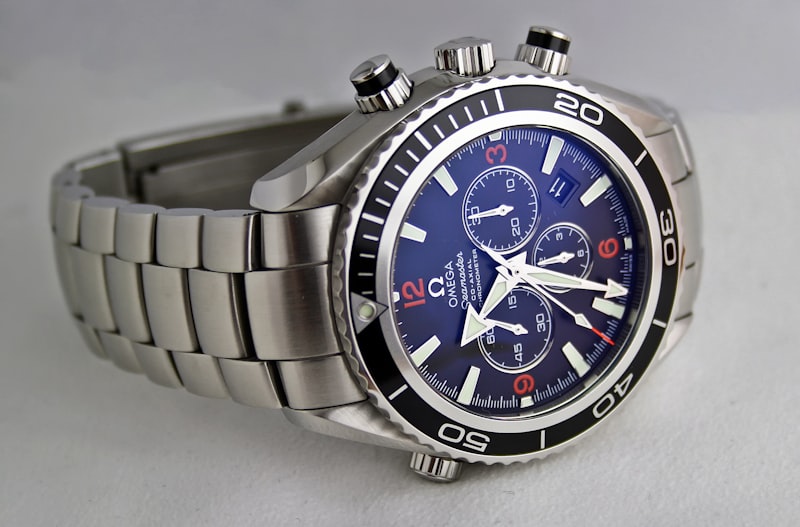
Audemars Piguet operates its AP House in the district, a concept that transcends traditional retail. The space functions as part boutique, part exhibition hall, and part private lounge for the brand's most dedicated collectors. Recent events have included intimate unveilings of limited-edition Royal Oak variations and horological workshops where collectors can examine movement architecture under magnification with AP's master watchmakers.
Richard Mille, whose timepieces regularly exceed $200,000 and whose production is limited to roughly 5,500 pieces per year globally, maintains a boutique that serves as a hub for South Florida's growing community of serious watch collectors. Harry Winston rounds out the horological triumvirate with a salon that showcases both its legendary diamond jewelry and its increasingly respected watchmaking division.
And then there are the cars. Bugatti and Rolls-Royce both operate showroom spaces in and around the Design District, recognizing that their clientele overlaps almost perfectly with the neighborhood's existing foot traffic. A person leaving Hermès with a Birkin is, statistically speaking, also in the market for a Cullinan. The Design District has made it possible to satisfy both impulses on the same afternoon.
Home Design: Where Fendi Casa Meets Tropical Modernism
The Design District's original identity as a home furnishings hub has not been lost amid the fashion invasion. If anything, the arrival of luxury fashion houses has elevated the neighborhood's home design offerings to a level that matches its fashion credentials.
Fendi Casa operates a showroom that showcases the Italian house's furniture, lighting, and accessories collections, all reflecting the same sensibility that defines its fashion line: bold geometry, rich materials, and an unapologetic sense of luxury. The showroom has become a destination for interior designers furnishing the new generation of ultra-luxury condominiums rising along Biscayne Bay and the barrier islands.
Nearby, showrooms from B&B Italia, Poliform, Minotti, and Roche Bobois complete a home design corridor that rivals anything in SoHo or the D&D Building. For Miami's real estate developers, the proximity of world-class furnishing showrooms to their project sites is a practical advantage that New York developers, whose clients may need to source from a dozen different neighborhoods, do not enjoy.
The Private Aviation Connection

One factor that rarely appears in retail industry analyses but profoundly shapes the Design District's success is Miami's position as a private aviation hub. Opa-locka Executive Airport, Miami Executive Airport, and Fort Lauderdale Executive Airport collectively handle tens of thousands of private jet movements annually, with volume increasing sharply during Art Basel, the Miami Grand Prix, and the November-through-April social season.
For luxury brands, this means something specific: a customer base that is not limited by local population. The Design District draws shoppers from São Paulo, Mexico City, Bogotá, New York, London, and increasingly from the Middle East, all arriving on private aircraft and looking for a concentrated luxury experience that can be completed in a single afternoon. The neighborhood's walkability and density make it possible to visit Hermès, Chanel, Audemars Piguet, and Manolo Blahnik in a single two-hour circuit, an efficiency that sprawling luxury malls cannot match.
This dynamic explains why the Design District's per-square-foot retail performance has been climbing steadily while traditional luxury corridors in other cities have plateaued or declined. The customer base is not local. It is global, mobile, and willing to travel for the right shopping environment.
Architecture as Brand Statement
The Design District's physical environment deserves its own discussion because it represents something genuinely different from any other luxury shopping destination in the world. Unlike Fifth Avenue, where luxury brands occupy floors within existing buildings, or Rodeo Drive, where the architecture is largely uniform, the Design District has encouraged individual brands to commission statement architecture that functions as both retail space and cultural landmark.
The result is a neighborhood where every block offers a different architectural conversation. Buckminster Fuller's "Fly's Eye Dome" sits in a public plaza surrounded by buildings designed by Sou Fujimoto, Aranda/Lasch, and K/R Architecture. ICA Miami, the Institute of Contemporary Art, occupies a purpose-built museum space that anchors the district's northern end and reinforces the connection between luxury commerce and cultural programming.
For the brands, this architectural freedom is a marketing advantage that money cannot buy elsewhere. A Dior boutique in the Design District can be a Dior building in the Design District, with every exterior surface, every landscape element, and every spatial sequence contributing to brand expression. That level of creative control simply is not available on a shared block of Madison Avenue.
What New York Didn't See Coming
The title of this article is deliberately provocative, but it is also accurate. New York's luxury retail establishment spent the 2010s focused on Hudson Yards and the reinvention of department stores, while Miami was assembling, block by block, the most concentrated luxury district built anywhere in America since Rodeo Drive's golden era in the 1980s.
The numbers bear this out. Retail vacancy in the Design District is effectively zero for luxury tenants. Rents have climbed to levels that compete with upper Madison Avenue. And perhaps most tellingly, brands that traditionally maintained their only U.S. flagship in Manhattan are now opening Miami locations that match or exceed their New York stores in size, design investment, and revenue.
Miami's Design District has not replaced New York. That is not the argument. The argument is simpler and more consequential: for a growing number of the world's most important luxury brands, Miami is now the first choice for their most ambitious American retail projects. That shift happened in less than a decade. And New York, to its credit, is still figuring out how to respond.
Sources: Forbes, Miami Living Magazine, ICSC, Galerie Magazine, Miami Design District official


